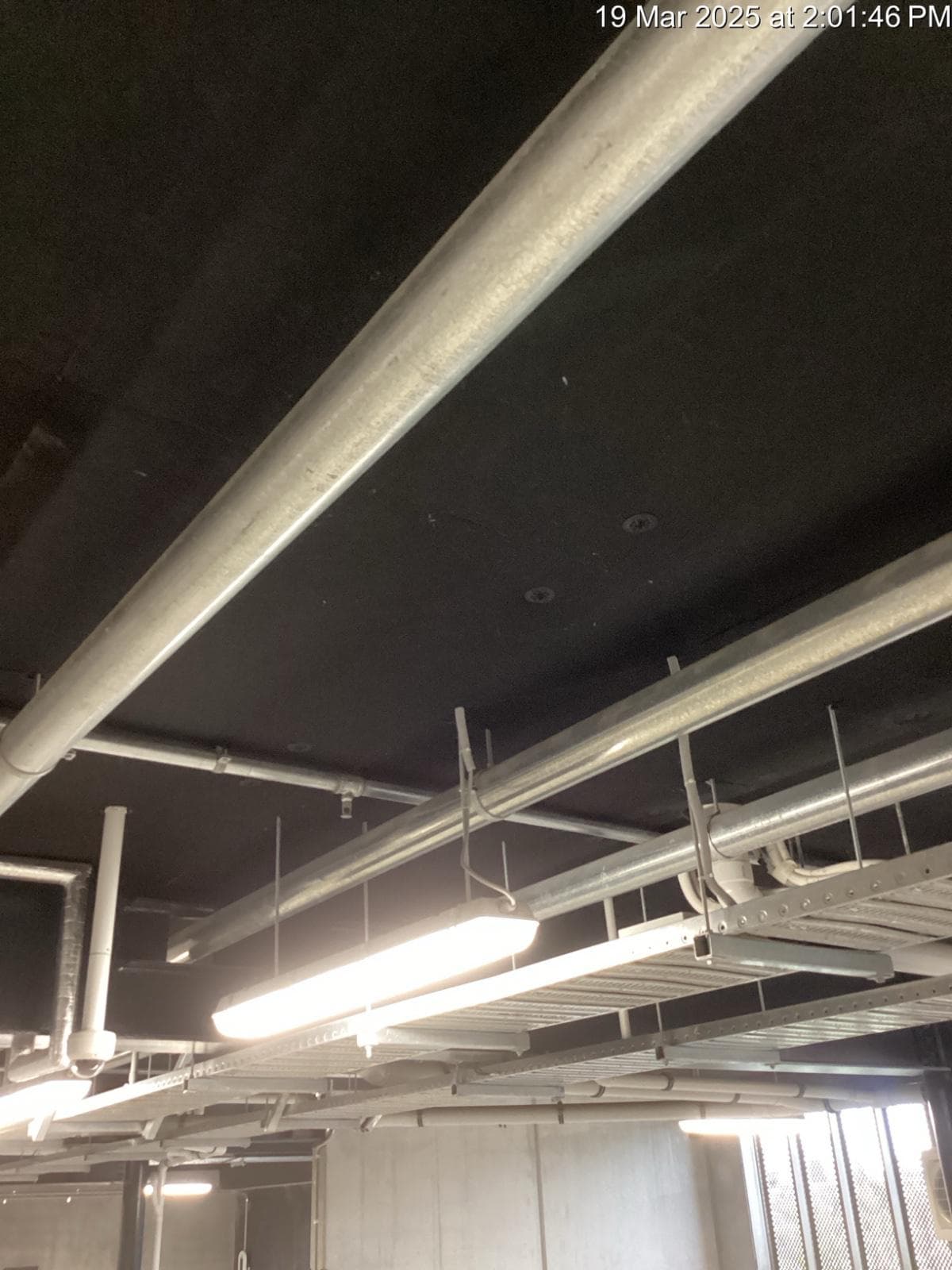
Carpark Acoustic Insulation
Concrete reflects. Polyester absorbs.
Installed to the specified NRC.
- Published NRC data
- ISO 354 tested
- Thermal in the same layer
- QA documentation
Carpark acoustic insulation supplied and installed to concrete soffits throughout New Zealand. A polyester liner absorbs the noise a bare concrete deck reflects back, and we install to the NRC the acoustic report specifies rather than to the nearest product on the shelf.
What you get
Auckland based, nationwide
We go where you need us, so you get the same crew wherever the next project is.
Programme focused
We work backwards from your schedule and resource the job accordingly.
QA & PS3 supplied
A QA package and completion documentation at handover, under a 5 year workmanship guarantee.
SiteWise Green 2026/27
Prequalified through Site Safe, so we clear main contractor onboarding before we quote.
Why are carparks so loud?
A carpark is close to the worst-case room for reverberation. Every boundary is hard, the volume is large, and there is nothing soft in it. Sound keeps reflecting until it runs out of energy, which takes a long time.
That matters most where people live above it. In an apartment or retirement village with parking underneath, the carpark is the room below somebody's bedroom, operating at six in the morning. Roller doors, engine start-up, reversing alarms and conversation all carry, through a slab designed for structural performance rather than acoustic separation.
None of it shows up on a drawing, which is why it gets priced last and noticed first.
How much sound does each system absorb?
Both polyester systems publish absorption data. The rigid phenolic boards publish none, because a closed-cell board does not absorb. Where noise is in scope, that is the clearest reason to specify a polyester liner over a board.
| System | Absorption | Basis |
|---|---|---|
| Mammoth Carpark Panel | NRC 0.85 | R1.7 at 70mm, tested to ISO 354 |
| GreenStuf ASL (Autex) | NRC 0.65 – 1.05 | Varies by thickness and facing. Full octave-band absorption data published. |
| Kingspan Kooltherm K10 G2 | Not an acoustic product | Rigid closed-cell phenolic. No absorption data published. |
| GreenStuf Phenolic Foam Board | Not an acoustic product | Rigid closed-cell phenolic. No absorption data published. |
NRC is a single-number average across four frequency bands. NRC 0.85 means roughly 85 percent of the sound energy hitting the surface is absorbed rather than reflected. Where an acoustic engineer needs more, Autex publish the full octave-band table for ASL and we supply it with the quote.
Source documents: Mammoth Carpark Panel product data (InZone), GreenStuf ASL data sheet (Autex), GreenStuf Phenolic Foam Board data sheet (Autex), Kingspan Kooltherm K10 G2 data sheet (Comfortech).
Absorption and isolation are different things
A soffit liner absorbs sound inside the carpark. Reverberation drops, so the space is quieter to be in and noise made there decays faster. That is absorption, and it is what an NRC measures.
Stopping sound transmitting through the slab into the apartment above is a different problem. That is isolation, and it comes from the floor assembly: mass, decoupling and the finish above. Anyone telling you a soffit liner will solve an impact noise complaint upstairs is overselling it.
Where to install acoustic insulation
Apartments and retirement villages over parking
The most common case. Occupied space sits directly above a hard room that runs around the clock, and the soffit is doing thermal duty under H1 anyway. A polyester liner rather than a board gets the acoustic performance in the same layer, at the same install cost.
Podium and basement carparks that read as part of the building
Where a carpark is lit, finished and used by residents rather than treated as plant space, reverberation is what makes it feel unfinished. A black-finish liner treats the acoustics and the appearance in one pass.
Where an acoustic report already exists
If a reverberation time or absorption target has been set, we install to the specified variant and hand over the manufacturer's acoustic documentation with the QA pack, so sign-off is evidenced rather than assumed.
Why does coverage decide the acoustic result?
Absorption is a function of area. A liner covering eighty percent of the soffit does not give you eighty percent of the benefit you specified. The untreated concrete keeps reflecting, and hard patches between absorbent ones are what produce flutter.
So the acoustic result comes down to the same thing as the thermal one. Is the panel cut and scribed around every duct, tray, hanger and sprinkler drop, or butted up and left short? Every gap of exposed concrete is a reflective surface in a ceiling paid for to absorb.
It is also why sequencing matters more on an acoustic job. A soffit that is already full when we arrive gets more cuts, more short panels and more exposed concrete, and the performance loss does not surface until somebody complains, long after practical completion.
Acoustic soffit liner, installed to the specified performance
We install polyester acoustic soffit liner to carpark, podium and basement ceilings throughout New Zealand, from a base in Auckland. We install the variant the acoustic report calls for rather than an equivalent R-value, because the absorption figure changes with thickness and facing and a substitution can quietly cost you the performance the report was written around.
Get your carpark priced
Tell us the building and where the parking sits under it. Drawings and the acoustic report can follow, and we will confirm the variant before anyone prices it.
- Fast turnarounds, within 24–48 hours
- Acoustic documentation supplied with the QA pack
- We install the specified variant, not an equivalent
Your project details are kept confidential.
Carpark acoustics: common questions
- We are building apartments above a carpark. Will insulating the ceiling help with noise?
- Usually yes, if the noise is coming off the carpark rather than through the slab. Bare concrete reflects sound off every surface, so engine noise, doors and voices carry. A polyester liner absorbs that energy and shortens reverberation time. Mammoth publish NRC 0.85 at R1.7 tested to ISO 354, Autex publish 0.65 to 1.05 across GreenStuf ASL. Rigid phenolic board is closed-cell and is not an acoustic product.
- What NRC do I need for a carpark ceiling?
- There is no Building Code minimum for absorption in a carpark. It comes from the project's acoustic report, or from the developer's expectations if there is no report. Where a target exists the acoustic engineer converts it into a product and a coverage area. Without one, the practical answer is that the highest NRC available in the specified R-value costs no more to install.
- Will a soffit liner stop noise coming through into the apartment above?
- Not on its own, and be careful of anyone who says otherwise. A liner absorbs sound inside the carpark. Isolating sound that transmits through the slab is a different problem, and it is a function of the floor assembly: mass, decoupling and the finish above. Absorption lowers the energy available to transmit, but a ceiling lining is not a fix for an impact noise complaint upstairs.
- Do rigid insulation boards provide acoustic absorption?
- No. Kingspan Kooltherm K10 G2 and GreenStuf Phenolic Foam Board are rigid closed-cell phenolic, and neither manufacturer publishes absorption data, because absorption is not what the product does. If noise is in scope, specify a polyester liner. If headroom forces a rigid board, the acoustic treatment has to come from somewhere else in the design.
- Does the finish change the acoustic performance?
- Yes, and it is the detail most often missed. GreenStuf ASL publishes NRC from 0.65 to 1.05 depending on thickness and on whether the facing is unlaminated, foil or black. Foil reflects some of the sound a bare polyester face would absorb. A specification naming the product without the variant has not specified the acoustic performance.
Sources and external links(4)
Every figure on this page traces to one of the documents below. Where a manufacturer publishes conflicting versions, that is stated in the text rather than resolved silently.
Last updated