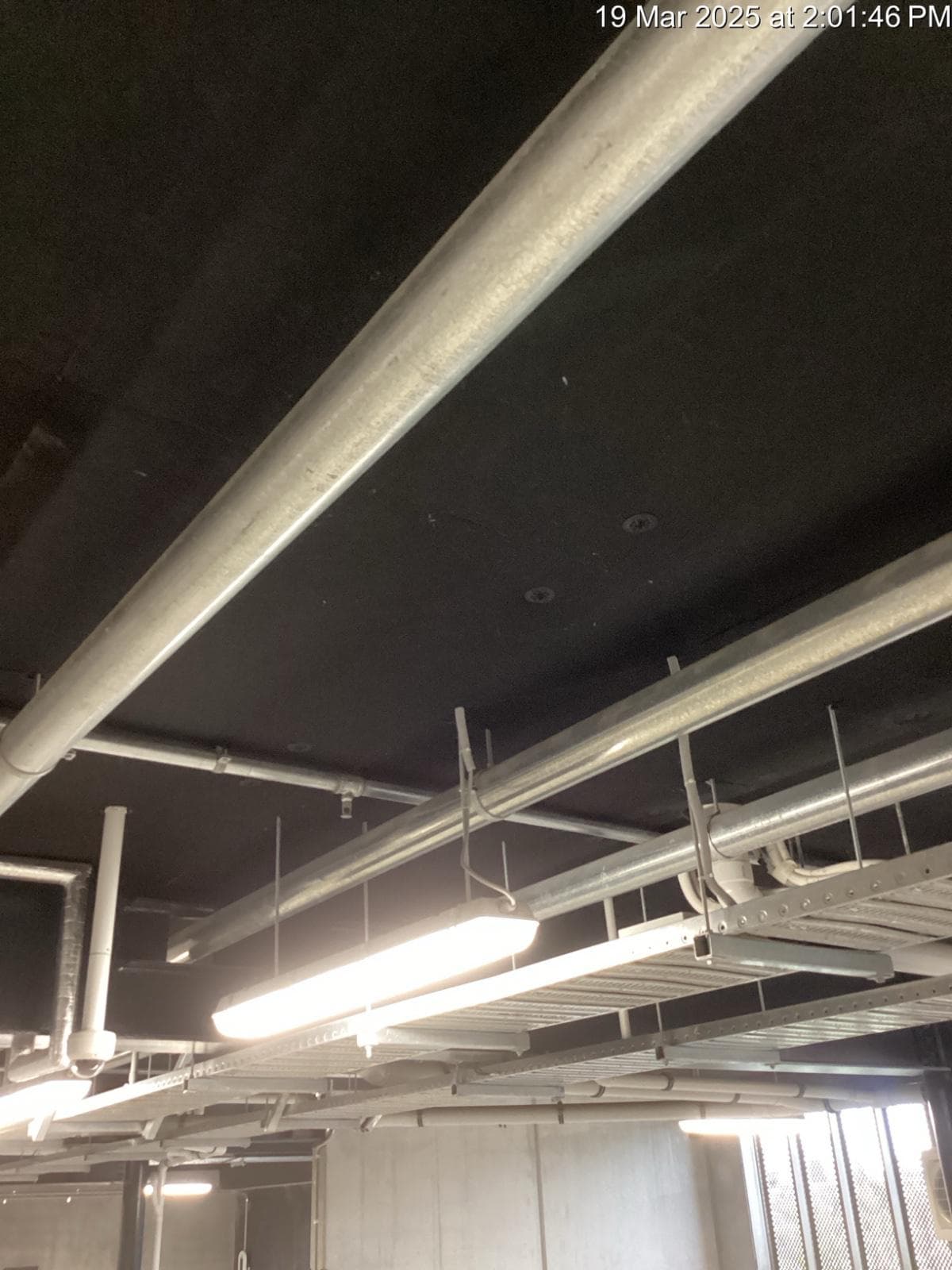
Soffit Liner Installation New Zealand
Carparks. Podiums. Basements.
Installed to programme.
- Fast pricing
- Expert install
- QA documentation
- Built for commercial
Soffit liner installation to commercial carpark, podium and basement ceilings throughout New Zealand. GreenStuf ASL or Mammoth Carpark Panel, supplied and installed to the specified R-value and finish, set out around services before we start.
What you get
Auckland based, nationwide
We go where you need us, so you get the same crew wherever the next project is.
Programme focused
We work backwards from your schedule and resource the job accordingly.
QA & PS3 supplied
A QA package and completion documentation at handover, under a 5 year workmanship guarantee.
SiteWise Green 2026/27
Prequalified through Site Safe, so we clear main contractor onboarding before we quote.
Soffit lining is the trade that gets squeezed
Soffit lining sits at the end of a long chain: structure, services, then you. By the time the level is available the programme has absorbed everyone else's delay, and the lining window is whatever is left.
That is when set-out mistakes happen. Liner run out without a services plan turns every tray, duct and hanger into an improvised cut, and the finished line reads as a patchwork from the deck below. Getting it right the first time is cheaper than any remediation, because the cost on a soffit is access and material.
Where is soffit liner used besides carparks?
Carpark ceilings are the most common application. They are not the only one.
Podium slabs
Where a landscaped or occupied deck sits over open space and the underside is visible from ground level. The liner insulates it and absorbs the noise flanking up from below.
Transfer slabs and cantilever undersides
Where an upper floor projects past the one below and the exposed underside separates conditioned space from outside air. These get missed more than any other element, because on the drawings they read as neither a floor nor a wall.
Exposed reveals and bulkheads
Where the lining continues around a step in the slab and the termination detail decides whether it looks deliberate.
Plant rooms and service corridors
Where the acoustic performance matters more than the thermal.
GreenStuf ASL or Mammoth Carpark Panel, which should you specify?
Both are 100% polyester, both are Group 1-S, both come as 2400 × 1200mm pads and both go up the same way. The choice comes down to how the soffit has to look, the R-values you need, and cost. Mammoth is the affordable one. GreenStuf ASL is the one to specify when you are after a particular look. Because the install method is identical, the difference is a material rate rather than a labour rate, which is why it is worth pricing both on a large functional carpark.
| GreenStuf ASL (Autex) | Mammoth Carpark Panel | |
|---|---|---|
| Manufacturer | Autex Industries, Hobsonville, Auckland | InZone Industries, East Tamaki, Auckland |
| Material | 100% polyester fibre, minimum 57% recycled content from PET | 100% polyester fibre |
| Sheet size | 2400 × 1200mm pads, tolerance +10/0 on length and +5/-0 on width | 2400 × 1200mm pads |
| Colour | Unlaminated (Flint light grey), foil, or black lined | Mottled grey only |
| Finishes offered | Three | One |
| R-values | R1.7 / 75mm, R2.1 / 90mm, R2.5 / 100mm, R3.0 / 140mm. Minimum order quantities apply across the ASL range | R1.7 / 70mm and R2.5 / 100mm. Minimum order quantities apply |
| Pack coverage | 5.76m² to 11.52m² by thickness and finish, so the same ceiling can be twice the pallet count and twice the site handling depending on the R-value specified | 11.52m² at R1.7, 8.64m² at R2.5 |
| Density | 17.1 to 34 kg/m³ by thickness and finish | 28.57 kg/m³ at R1.7, 32.0 kg/m³ at R2.5 |
| Acoustic | NRC 0.65 to 1.05, full octave-band data published | NRC 0.85 at R1.7 to ISO 354. No NRC published for R2.5 |
| Fire | Group 1-S, ISO 9705:1993. Smoke production rate under 5.0m²/s. Fire refs FAR4045 (unfaced and black), FC10711-01 / FI 5550 (foil) | Group 1-S under NZBC C/VM2 Appendix A, and Group 1 under the Australian NCC, from the same test |
| Fixings per panel | 11 per standard panel, at no more than 600mm centres, 100mm minimum and 200mm maximum from each edge | 11 to 12 insulation anchors per panel |
| Durability warranty | 50 years | 90 years |
| Max service temperature | 160°C unfaced, 90°C faced | Not stated |
| Clauses cited by the manufacturer | B2.3.1(a), C3.4(a), F2, H1, G6 | Not stated |
Source documents: GreenStuf ASL data sheet (Autex), GreenStuf ASL install instructions (Autex), GreenStuf product list (Autex), Mammoth Carpark Panel product data (InZone), Mammoth 90 Year Warranty (InZone).
Which soffit liner finish should you specify?
Unlaminated
A grey polyester finish. Specify it where a single grey is all the job needs, where the soffit sits above a suspended ceiling, or where another lining goes over the top.
Mottled grey
Mammoth Carpark Panel, and the only finish it comes in. Against a grey slab it reads as part of the building rather than as a lining, which on a functional level is the point. It is the affordable option of the two polyester systems, in R1.7 and R2.5 only.
Foil
A fire-compliant foil laminate. Reflective and industrial, and correct for plant rooms, service areas and functional carparks where nobody is looking up. Foil reflects some of the sound a bare polyester face would absorb.
Black
What you specify when the soffit needs to disappear. In a lit basement or a podium underside a black soffit recedes, and the services below it read as intentional rather than as clutter. Be realistic about it: the black varies between production runs and the face can wrinkle, so it is not a high visual finish product.
Two details decide whether it looks right
Penetrations. Sprinkler drops, cable trays, duct hangers and conduit all pass through the plane of the liner, which is why what is already on the slab decides the rate. Cut and scribed on site, they disappear. Butted up to and left short, every one is a visible gap of bare concrete, and there are hundreds of them in a carpark.
Transitions. Where the liner meets a downstand beam, a ramp soffit, a bulkhead or a wall, someone decides how it terminates. If that is not decided at specification it gets decided by whoever is holding the tool that day, and it will not be consistent across the building.
We price clear runs, which means: penetrations done, plumbing elbows in, passive fire complete, rods and hangers in. Arrive to a ceiling already full and full sheets will not go up. Every panel gets measured, transcribed, cut and then squeezed in above services that are already there. Same finish either way, and far more hours to reach it.
Soffit liner systems, installed by a commercial crew
We install soffit liner and lining systems to commercial carpark, podium and basement soffits throughout New Zealand, from a base in Auckland. Set-out is planned around services before install starts, and the level is handed back with QA documentation complete.
Get your soffit priced
Name, email and roughly what you have got. Send drawings once we have replied and we will price the scope.
- Fast turnarounds, within 24–48 hours
- Clear scope and inclusions
- Experienced team on your site
Your project details are kept confidential.
Soffit liner: common questions
- What is soffit liner?
- A panel of thermally bonded polyester fixed to the underside of a concrete slab where that underside is left exposed. On a carpark it does three jobs at once: holds heat in the floor above, absorbs the noise a bare concrete box reflects, and gives the ceiling a Group 1-S fire classification. Two products cover the New Zealand market, GreenStuf ASL by Autex and Mammoth Carpark Panel by InZone, both 2400 by 1200mm panels.
- Who installs Mammoth Carpark Panel and GreenStuf ASL in New Zealand?
- We do, and we install both rather than pushing one. GreenStuf ASL is made by Autex in Hobsonville, Mammoth Carpark Panel by InZone in East Tamaki. Both are 100% polyester, both Group 1-S, both 2400 by 1200mm and both fixed the same way, so the labour rate is the same and the difference is material. If your specification names one, we install that one. If it does not, tell us the look and the R-value and we will price both.
- What R-values does GreenStuf ASL come in?
- R1.7 at 75mm, R2.1 at 90mm, R2.5 at 100mm and R3.0 at 140mm, all in 1200 x 2400mm pads. R1.7 through R2.5 come in unlaminated, foil and black finishes. R3.0 is unlaminated and black only, with no foil option. Pack coverage runs from 5.76m² to 11.52m² depending on thickness and finish.
- What is the cheapest carpark soffit liner in New Zealand?
- Mammoth Carpark Panel. In our own buying it sits below the GreenStuf ASL range for a comparable R-value, and because both are 2400 by 1200mm polyester pads fixed the same way, the saving lands in the material rather than the labour. Neither manufacturer publishes a rate and no merchant lists one, so treat that as our purchasing experience rather than a published figure. The trade-off is choice: Mammoth is mottled grey at two R-values, GreenStuf ASL is four R-values across three finishes. On a functional level the cheaper panel is usually the right call.
- Does soffit liner have an acoustic rating?
- Yes. Autex publish NRC 0.65 to 1.05 across the GreenStuf ASL range, with full octave-band data by thickness and facing. Mammoth publish NRC 0.85 for the R1.7 panel tested to ISO 354. Rigid phenolic board is closed cell and is not an acoustic product, so where reverberation control matters, specify polyester.
- Can soffit liner be glue-fixed instead of mechanically fixed?
- Adhesive is permitted for GreenStuf ASL in certain applications, but Autex put the onus on the installer to verify the adhesive and the substrate, and recommend talking to the adhesive supplier with samples first. The default is mechanical: insulation anchors at no more than 600mm centres, 11 per standard panel, fastener length matched to panel thickness. Every manufacturer's fixing schedule compared.
Sources and external links(5)
Every figure on this page traces to one of the documents below. Where a manufacturer publishes conflicting versions, that is stated in the text rather than resolved silently.
Last updated